This is another article about a cooking lesson. These “lessons” are becoming a regular part of my life and I LOVE IT. I think they might be my favorite byproduct of writing this food article. With each lesson, I get to make a new friend and learn about new food and culture. I have never thought about how odd it is to invite someone into your house and then ask them to cook for you and a bunch of other people. But a little pressure is good for the soul and the appetite. It has been a wonderful experience, and I have made many new friends. Also, no one has turned me down for a lesson, yet. I think people want to share their family recipes. It is part of their heritage and legacy.
This cooking lesson was all about fondue. I love cheese and making fondue has been a family tradition that we enjoy on New Year’s Eve. However, I have been stuck using the pre-packaged, pre-prepared envelope fondue mix that is available in most grocery stores. I have tried to make homemade before, and it always ends up being a greasy, yucky mess.
My fondue lesson was from a real Frenchman and a real scientist. His name is Yann Gilbert, PhD. He is a researcher and professor at the University of Mississippi Medical Center and was recruited to UMMC from Australia. I looked up his research focus and I could barely pronounce any of the words. It says he is using transgenic technologies in his lab to study metabolic genetic diseases, such as diabetes, obesity, but also cancer. Wow, not entirely sure what all that means, but I know he is doing critical research on life saving technologies and therapies. That is quite impressive and I am thankful for his work and his commitment to UMMC. It is something in which all Mississippians should take pride.
That said, the bottom line for me was: “Can he cook fondue?” Absolutely. What a great guy. Yann came over to a house full of interested “friends” and taught us how to do it. It is not difficult and you can alternate the flavor of the dish based on the type of wine and the type of melting cheeses that you use. He sent me his three favorite cheeses with which to make fondue. I could only find one at the time, but Yann says he orders some of his cheeses from Amazon. You can certainly substitute other melting cheeses from Switzerland, Germany, or any places in that region.
Yann patiently showed us exactly what to do, and the highlight of the evening was when he explained what most French do to finish off the pot of fondue. The crispy cheese that forms at the bottom of the fondue pot is my favorite part, but Yann showed us what they do once you get to the bottom of the pot. They leave the remaining cheese in the pot and turn up the heat. Once the cheese starts to sizzle a little, crack one egg and scramble it in the pot with a wooden spoon. Cook, scraping the bottom, and mix in all the remaining cheese. Remove and enjoy. It is the BEST, cheesy scrambled egg I have ever had!
I am so thankful to Yann for making Mississippi his home, and appreciate all his work and research to improve the lives of the people of our state and beyond.
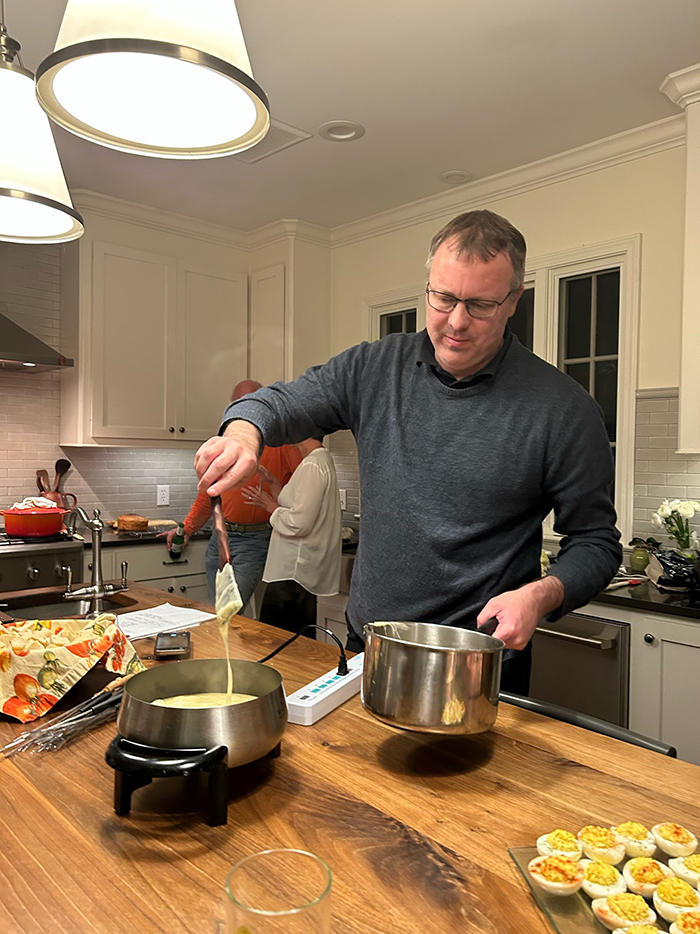
Yann’s Cheese Fondue
(For four people)
1 garlic clove
30 cl dry white wine (about 10 fluid ounces)
400 grams gruyere cheese (about 14 ounces by weight)
400 grams Comte cheese
400 grams Beaufort cheese or similar cheese
1 teaspoon flour
Pepper
500 grams of bread
Grate all cheese and set aside. In a large heavy bottom pot, rub entire surface with the cut side of a garlic clove. Set garlic aside for another use. Pour in wine and add pepper. Bring to a simmer and then slowly begin adding in cheese, one handful at a time, stirring constantly with a wooden spoon, and reducing heat to medium or low. Continue to stir and add in cheese until it is completely melted and the consistency of a thick sauce. Sprinkle in flour stir until well mixed and thick. Pour fondue in a fondue pot and put on warm to serve.
Serve with bread and monitor heat.
Translation of Yann’s Fondue Recipe
(with “sort of” metric conversions)
Since I could not find Comte or Beaufort cheese at any store in the metro at the time of the lesson, I made a few substitutions. I have since found Comte at a few specialty cheese counters. What Yann explained as he was cooking is that if you get some good quality gruyere to melt, then you can substitute several other French (Dutch, Swiss) cheeses, such as Emmenthaler. Gruyere can be rather expensive so I did not want to just use that type and added a few more cost effective, yet flavorful options.
Also, no matter how many times I asked Google the conversion of grams to ounces, I still got confused. I have tried to estimate the correct amount of cheese by weight, converted into volume measurements in ounces and cups. I grated all the cheese that I purchased and mixed it in a large bowl. Yann was able to add handfuls until it got to the consistency he wanted. My best guess it that you need about five cups of grated melting cheese for four people.
1 garlic clove, cut in half
10 ounces or about 1 1/4 cups dry white wine
12-14 ounces gruyere cheese by weight or about 1 1/2 cups once grated
12-14 ounces Emmenthaler cheese by weight or about 1 1/2 cups once grated
12-14 ounces Beaufort cheese or similar cheese by weight or about 1 1/2 cups once grated
1 teaspoon flour
A pinch of pepper
1-2 loves crusty French bread, cut into bite sized pieces
Grate all cheese and set aside. In a large heavy bottom pot, rub entire surface with the cut side of a garlic clove. Set garlic aside for another use. Pour in wine and add pepper. Bring to a simmer and then slowly begin adding in cheese, one handful at a time, stirring constantly with a wooden spoon, and reducing heat to medium or low. Continue to stir and add in cheese until it is completely melted and the consistency of a thick sauce. Sprinkle in flour stir until well mixed and a smooth, thick consistency. Pour fondue in a fondue pot and set on “warm” to serve.
Serve with bread and monitor the heat in your serving pot.
While I left the fondue cooking to Yann, I wanted to serve a few French classics for dinner. This was our menu.
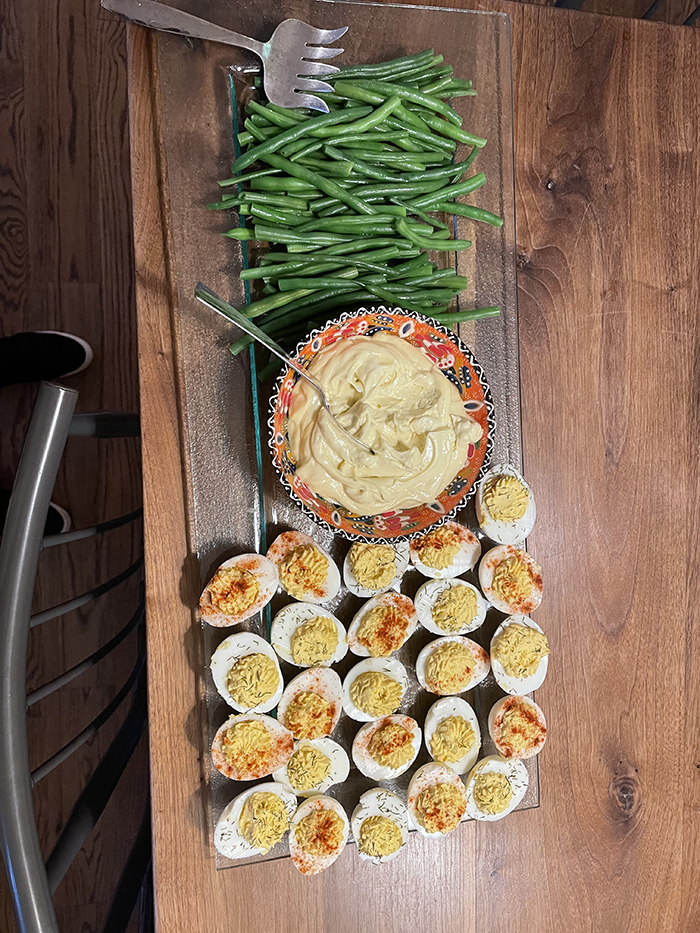
Mayonnaise with Roasted Garlic and French
Green Beans
The French love mayonnaise like we love ketchup or ranch dressing. It seems like they serve it with almost everything.
Some people are not fans of this condiment but I believe that is because they have never had “real mayonnaise,” and do not realize how much better homemade mayonaisse tastes. I have never tried to mix it by hand, but have found that the food processor version is so easy. Feel free to add any mixture of herbs or flavors that you like.
Serve this mayonnaise with any mixture of steamed or fresh vegetables, or even as a salad dressing.
To roast garlic:
Wrap four cloves of peeled fresh garlic, a teaspoon of olive oil and a pinch of salt in a small foil packet. Bake in a 350° oven for about 20 minutes until the garlic cloves are soft. Set aside.
To make mayonnaise:
Process one egg and two egg yolks in the bowl of a food processor for about one minute. With a machine running add one fourth teaspoon dry mustard powder, a half teaspoon salt, and one teaspoon of fresh lemon juice or white wine vinegar. Allow to process for about 30 seconds.
With machine running, slowly start adding two cups of your best quality olive oil or salad oil. Add in a small stream or droplets. Do not stop processing until you have added all the oil and the sauce is thick.
Pulse in roasted garlic and additional salt and pepper. Add in a little additional lemon juice or vinegar if mayonnaise needs to be thinned. Allow mayonnaise to rest an hour before serving.
To blanch the green beans
or haricot verts:
Trim any end of fresh French green beans (long and thin) and prepare a large pot of salted water. Allow water to come to a rolling boil and add whole green beans.
Simmer for about four to six minutes and then remove beans with a slotted spoon and immediately plunge them into a bowl of ice water. I like my green beans al dente or tender crisp. Once beans are cold, drain and dry.
Store in the refrigerator until ready to serve. Serve cold along side of mayonnaise.
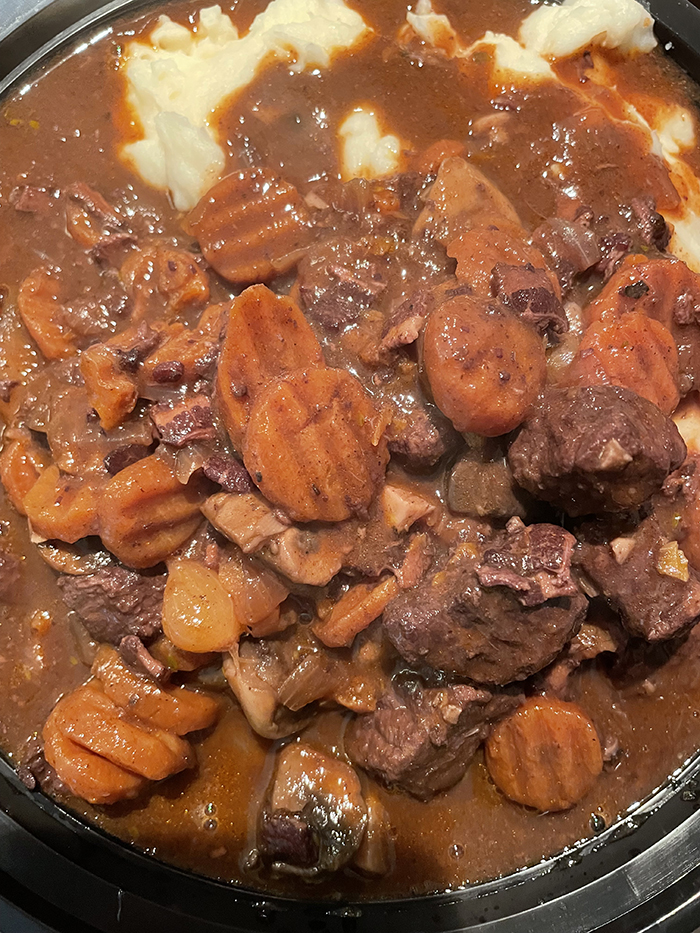
Boeuf Bourguignon
This is likely Julia Child’s most famous and widely used recipe. I can still remember the first time I tasted the amazing beef with the wine sauce that is created when this dish is finished baking. It takes some time to prepare and please be sure and make this one day before you plan to serve and allow it to slowly reheat in the oven. The flavors will only get better after a day.
I have combined several different recipes to make one that I think is delicious and a tad bit easier than Child’s original recipe. I hope you will find it is worth your effort.
8 ounces of bacon, finely diced
2 1/2 pounds beef roast trimmed and cut into 1-inch cubes, thoroughly dried
kosher salt and fresh ground black pepper
1 pound carrots, cut into 1 inch chunks
2 onions, sliced
2 cloves of garlic, chopped
1 bottle of very good dry red wine
2 to 2 1/2 cups beef broth
1 tablespoon tomato paste
1 teaspoon fresh thyme leaves
1/2 stick butter at room temperature
3 tablespoons all-purpose flour
1 pound frozen small whole onions
1 pound mushrooms cleaned and sliced
Cook bacon in a large Dutch oven until fat is rendered and bacon is crisp. Remove the bacon with a slotted spoon and reserve drippings. Dry beef cubes thoroughly with paper towels and sprinkle them with salt and pepper. In small batches so as not to overcrowd, sear the beef in the hot bacon fat for three to five minutes turning to brown on all sides. Remove the seared beef cubes and continue until all the beef is browned. Set aside.
Toss the carrots, onions, one teaspoon salt and black pepper into the fat and cook over medium heat for 10 to 12 minutes, stirring occasionally until the onions are slightly browned.
Add the garlic and cook one minute more. Put the meat and the bacon back in the pot with any juices that accumulated on the plate. Add wine and enough beef broth so that the meat is completely covered. Add the tomato paste and thyme. Bring to a simmer and cover the pot with the tight-fitting lid. Place it in the oven for about one and a half hours or until the meat and vegetables are very tender when pierced with a fork. Remove from oven.
At this point, the dish can be cooled and placed in the refrigerator for a few days.
When ready to serve, warm the beef stew and combine two tablespoons of butter and two tablespoons flour with a fork and then stir that into the warm stew to thicken, if needed.
In a separate pan, brown onions, and mushrooms until both are slightly browned. Add to the stew. Bring this to a boil and then lower the heat and simmer for about 15 minutes.
Season to taste and serve with sliced bread and top with fresh parsley.
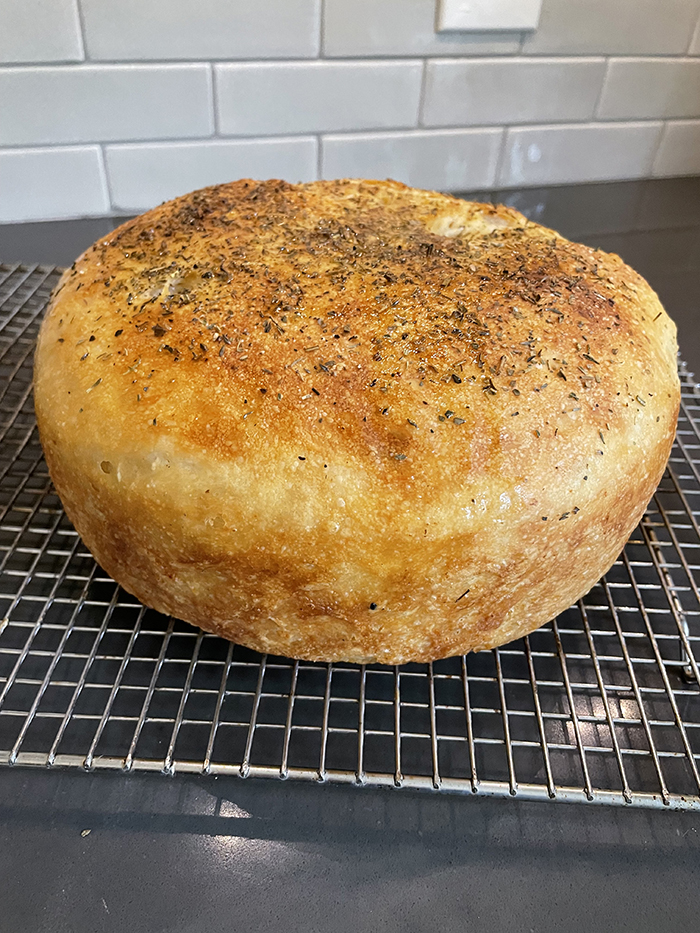
Peasant Bread
I did not want to make another “side” to serve with the beef so I opted to serve the stew over a slice of bread. It was a great choice and the guests agreed.
Mix:
4 cups flour
2 teaspoons each: yeast, salt, and sugar
2 cups very warm water
2- 4 tablespoons butter, softened
2-3 teaspoons herbs de Provence
Stir together all ingredients except butter and herbs until well combined. Cover and allow to rise at least an hour.
Heavily butter a six-quart oven proof pot such as a Le Creuset. Deflate the dough and place in pot turning to coat with butter. Top bread dough with herbs de Provence and allow to rise again for about 30 to 45 minutes.
Bake in a 400° oven for 45-50 minutes until bread is nicely browned and sounds hollow when tapped. I bake with the top on for about 30 minutes and then remove the top for the remaining time.
Remove from the oven and pot. Allow to rest for about five to 10 minutes before slicing.
Dauphinoise Potatoes
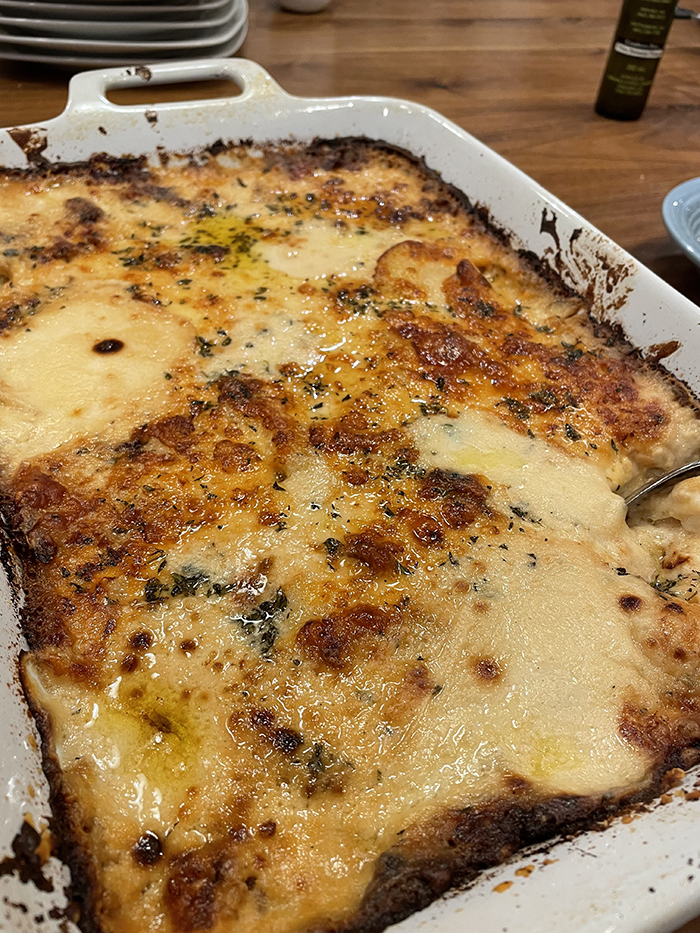
In case you want another side dish with your stew or for steak or pot roast dinner, these French style potatoes are an even richer version of scalloped potatoes. The potatoes are cooked in a mixture of milk and cream and then baked with layers of cheese. Rich and delicious.
2 tablespoons butter, softened
2 pounds, russet potatoes, peeled and sliced into 1/4 inch thick slices
2 cups whole milk
2 cups heavy cream
4 cloves garlic, minced
1/8 teaspoon ground nutmeg
kosher salt
freshly ground black pepper
2 cups Gruyere cheese
1 teaspoon fresh thyme leaves
Preheat oven to 350° and butter a two to three quart baking dish. In a large pot of water over medium heat, combine the potatoes, milk, cream, garlic, nutmeg, two teaspoons of the salt and 1 teaspoon of pepper.
Bring to a boil, then reduced to a simmer and cook until potatoes or tender. About eight to 10 minutes. Using a slotted spoon, transfer half of the potatoes to the baking dish and sprinkle with half the cheese. Top of the remaining potatoes and pour just enough of the milk mixture over the top of the potatoes until the liquid comes just the bottom layer of the potatoes. Sprinkle remaining cheese evenly over top.
Bake until the potatoes are golden brown and have absorbed most of the milk mixture. This will be about 45 to 50 minutes. Allowed to cool at least 10 minutes before serving. Garnish with a fresh thyme leaves and serve.
Raspberry Crumble Bars
Dessert for the evening was simple too. A friend had just picked up a few flats of fresh Louisiana strawberries so I served strawberries and fresh whipped cream, together with these raspberry bars. They never disappoint.
For the crust:
2 1/2 cups all-purpose flour
2/3 cup granulated sugar
1/2 teaspoon salt
16 tablespoons butter, cut into small pieces and chilled
For raspberry filling:
2 cups or 9 ounces frozen raspberries, thawed
1 cup seedless raspberry preserves
2 teaspoons lemon juice
1/4 teaspoon almond extract (optional)
a pinch of salt
For the strudel topping:
1 cup old fashioned rolled oats
1/4 cup packed brown sugar
2 tablespoons butter cut into small pieces, softened
To make the crust:
Preheat oven to 375° and cover a 9 x 13” baking pan with foil that is been sprayed with nonstick spray. Be sure to push foil into all the corners and up the sides of the pan. This will allow you to easily remove the cookies when finished baking. Process flour, sugar, and salt in a food processor until combined. Add butter and pulse until mixture resembles wet sand, about 15 pulses.
Remove 1 1/4 cups crust mixture and reserve in another mixing bowl.
Pour remaining crust into the prepared baking pan and press evenly to distribute the crust over the entire bottom of the pan. Use the bottom of a dry measuring cup to firmly press the dough into an even layer. Bake for 15 to 18 minutes until crust is light golden brown.
To make the raspberry filling:
Put all ingredients in the bowl of a food processor and pulse until chopped.
To make strudel topping:
Combine oats and sugar to the reserved crust dough. Add butter and rub mixture between your fingers until butter is fully incorporated in the mixture forms small clumps.
Once the crust has been baked to a golden brown, spread raspberry filling over crust and sprinkle streusel topping over filling. Bake in a 375° oven for about 24 to 28 minutes turning the pan halfway through baking.
Allow bars to thoroughly cool before lifting out of the pan. Cut bars into squares and serve.